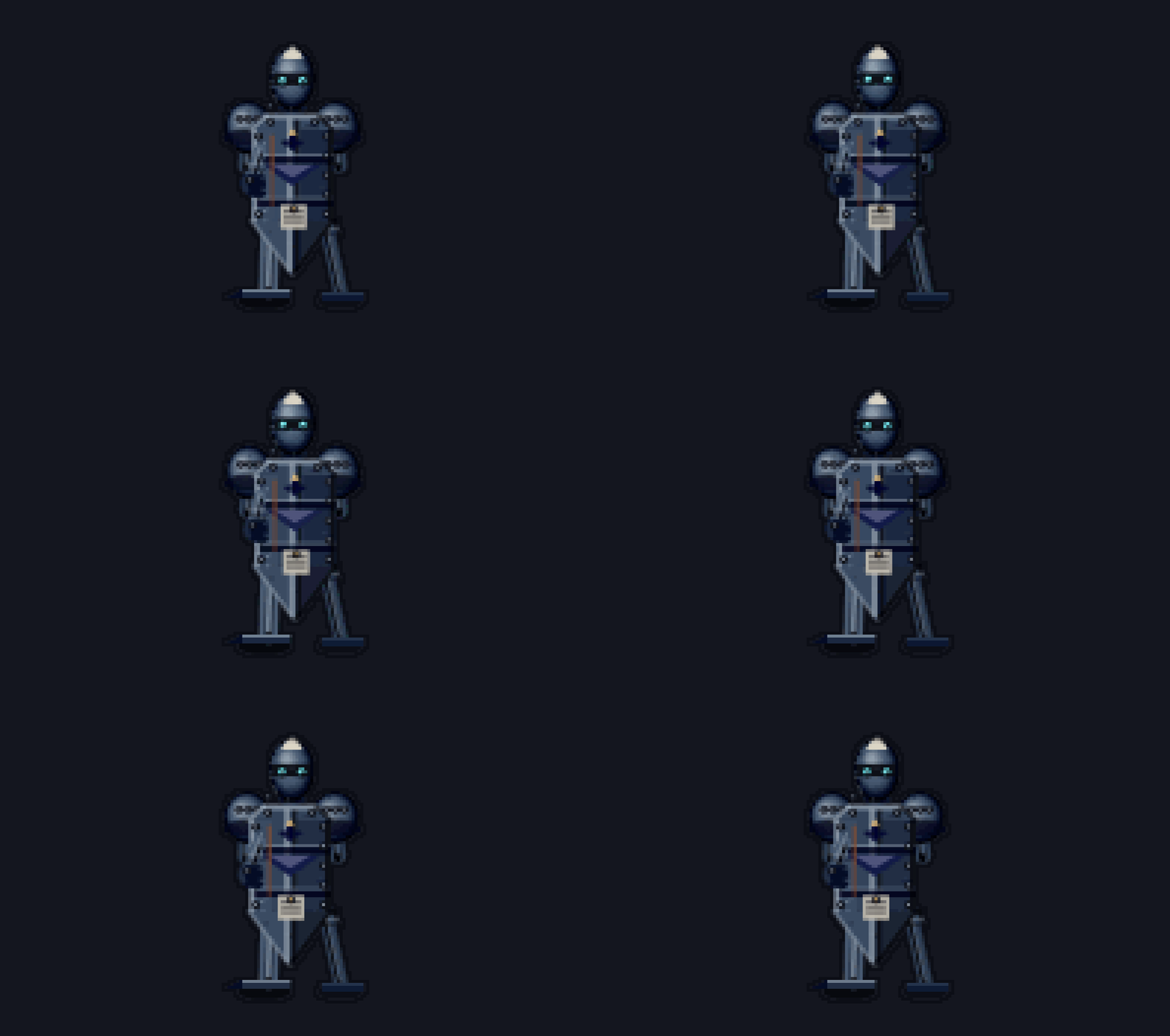
A backwards action-roguelite. You begin at 100% power, having just won the war the songs are about. The seven zones between the castle and your own front door each drain you — until you fight the doorstep beast at 22%, and the things hunting you turn out to wear the kingdom’s own sigil. The gratitude is a bill. The kingdom wants its miracle back.
Seven miles. Your power falls at every campfire. Here is the twist most games would end on and this one opens with — and the punchline the kingdom would rather you didn’t read.
Enemies get weaker near home.
You just decay faster.
Telegraphed swings you dodge on a single learnable beat. Perfect-dodge witch-time. Bullet deflection that sends the shot home harder. A crowd director that makes packs dangerous, never cheap. It hits like the games it grew up on.
Nearly every monster on this road was a person the kingdom’s paperwork happened to — a conscript rendered down, a collector kept past his contract. So of course they have names, epithets, and last words. The evil is boring and clerical on purpose; the goodness is small and specific: soup, bread, a second plate.
Every enemy attack follows the same rhythm, so the whole bestiary teaches one skill: read the flash, roll through it, punish the recovery.
Every enemy attack runs the same rhythm — windup, a white flash with an audible tick, the strike, then a spent, punishable recovery. Learn it once; it reads across the whole bestiary.
Roll through a strike at the last instant and the world slows to a crawl while you keep full speed. The roll’s stamina comes straight back.
Roll through an enemy bullet on the beat and you deflect it — it reverses, turns yours, and hits back harder. Melee perfect-dodge bends time; bullet perfect-dodge sends it home.
A souls-style director: at most two enemies commit to an attack at once while the rest circle just out of reach. Packs feel dangerous, not unfair.
Hit-stop, particles, screen shake. The 3-hit combo ends on a finisher — more damage, a bigger arc, heavy knockback.
Brutes, knights and the doorstep beast carry super armour: you cannot stunlock them out of a committed windup. Read the tell and get out of the way.
Every zone has people to talk to and choices that echo a mile or two later. Press a button; hear them out. Then keep walking.
The Bard’s ballad absorbs your deeds and loses verses as you fade. Everyone you meet gets an epilogue when you arrive — and a darker one if you take the throne instead.
The death screen answers who you were. A waystone with nine notches, a rotted court carriage, a sledgehammer left almost like an invitation — the props carry the history.
Win once and the road itself changes. It remembers across runs.
The full bestiary, drawn live from the game’s own data and animated by the same art engine that renders them in play. Nearly all of them were people the count could not keep. Search the dead; filter by how they fight.
Area bosses are the reversal made flesh. They learn — one new telegraphed move per turn of the Age. Two of them we can show you. The rest are sealed until you arrive.
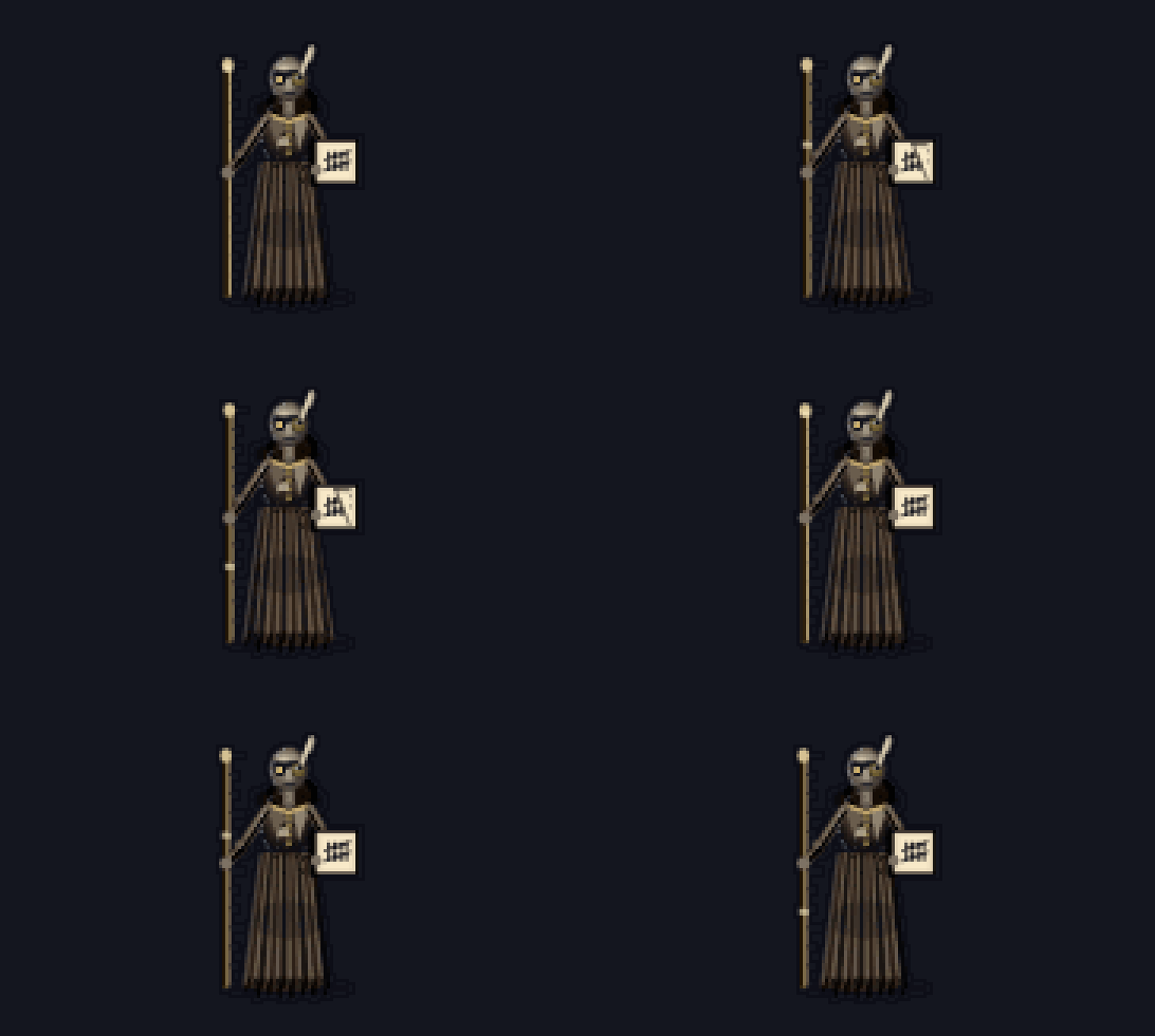
“'I watched you take the war. I take notes.'”
He meets you at every mile, tougher each time, wearing a different greatcoat and a colder face — the fixed reference against which you measure your own decay. There is always, he notes, less of you to collect than there was a mile back.

“'ASSET IN TRANSIT. HOLD THE LINE.'”
The line made a man; now he braces the shattered gatehouse the ballista could not hold. He is the gentlest thing standing between you and the next mile.
Smash the chest hidden in each mile — and fell the gold-shimmering elites — for gear that lasts the rest of the run. Every weapon is a real moveset; the finisher changes shape.


The loop is not, in the end, unbreakable. Scattered through the walk — in a wind that never finishes counting, a fifth votive candle no one lights, chalk marks in a hand the Crown can’t read — is a stratum the surveyor never mapped. Walk far enough past your own mailbox, into the realm of everything the kingdom ever wrote off, and the game — a loop pretending to be a line — can be made to actually end. What is out there, and who is buried inside it, is ████████ ███ ████ ████████ ████.
Every monster, hero and boss you meet is code-generated animated pixel art on the Sweetie-16 palette — built bone by bone from a compact spec by the game’s own art engine, not a sprite among them purchased. The score is synthesized WebAudio. A handful of static images set the scene; every character standing in it is written in code.
Play the first mile free, right now, in your browser — the throne antechamber to the first campfire. Then wishlist, and walk the rest of the way home.